
Experiments of Living

Throughout recorded history, ethical ideas have usually been traced to authorities. Most of the supposed authorities have been religious people, typically men who have claimed, or who have been credited with, a special mode of access to a divine revelation. Yet even the relatively rare, and significantly less popular, ventures in secular ethics have adopted a similar picture, grounding the principles they claim to be fundamental in episodes of ethical discovery, usually moments in which particularly perspicuous thinkers have recognized some deep and important truth that can then be received by all. Both religion and philosophy have been held by the picture of a complete system of ethical truth, something that great ethical teachers have begun to fathom and which, if it were fully disclosed, would provide humanity with definitive guidance about how to live.
I believe that picture should be abandoned. Instead of struggling to determine how some final system of ethical truth can be discovered (or revealed), it is better to start with a different question. Although it’s clear from the first surviving written documents that people have had a rich and complex system of precepts for thousands of years, it is also apparent that human life was not always thus. More remote ancestors, human beings without full language perhaps, were pre-ethical. Although they may have cooperated with one another at times, or behaved in ways we would recognize as worthy of ethical approval, they lacked the ethical perspective on their own actions. “Nice behavior” can exist without any ability to reflect on what should be done—indeed, it does exist among our evolutionary cousins, the chimpanzees and bonobos. So, we might ask, how did we come to have the ethical practices that permeate contemporary human societies? How did we get from there to here?
In answering this question, much can be learned from many disciplines, from primatology and evolutionary biology, from psychology, archaeology and anthropology, and from the history of the five thousand years since the invention of writing. Our remote pre-ethical ancestors lived in relatively small groups (with thirty to seventy members), mixed by age and sex. That style of group living required them to have a capacity for responding to the wishes and intentions of their fellows, to see what another group member hoped to achieve and to modify one’s own plans to promote another’s aim. A simple form of psychological altruism runs deep into the human past. Yet, as observations of contemporary chimpanzees and bonobos make plain, our ancestors’ inherited dispositions to altruism were almost certainly limited. Their societies, like the groups primatologists observe, were beset by occasions on which altruistic responsiveness failed—occasions on which trouble ensued and on which time-consuming peacemaking was required to hold a fragile social life together.
Human beings have transcended that tense and unpredictable existence. We can live together on a grander scale, in much larger groups, and engage with strangers in ways far beyond the narrow horizons of primate social life. My hypothesis is that this achievement rests on our ability to regulate our conduct. Shared ideals, values, and rules are already present in the fragments of Mesopotamian and ancient Egyptian law that have survived, and their complexity makes it evident that the activity of generating these ethical resources must have been part of human life for tens of thousands of years. For at least fifty thousand years, human beings have been engaged in what I like to call the ethical project. The ethical systems of the contemporary world are merely the latest variants in what John Stuart Mill called “experiments of living.”
Observations of groups whose environments are closest to those of our remote ancestors—of hunter-gatherers like the !Kung of the Kalahari Desert—furnish clues about the earliest experiments. Life is structured by values and precepts articulated in joint discussions, in which all adult band members participate on equal terms. Much care is taken to preserve social equality, to ensure that resources are shared, and to prevent violent quarrels. These human societies reveal how the problems that pervade the lives of our evolutionary cousins can be overcome, once there is a social process of regulating conduct. In other traditions, however, it is evident that the ethical project has outstripped such simple beginnings. How did that occur?
Because the Paleolithic and the early Neolithic only furnish a few scanty clues, no uniquely defensible answer can be given. Nevertheless, we know what changes must have occurred, and can provide scenarios for the gradual evolution of the ethical life discernible at the dawn of history—thus forestalling suggestions about the need for a great revelation. The ethical project came to endorse the needs of all group members for the basic resources of life, encouraged the division of labor as a means for increasing the supply of those resources, gradually distinguished roles and contributions, allowed for negotiation with neighboring groups and, through the fostering of cooperation, eventually produced refined forms of altruism, in which partners came to value their attunement to one another in joint projects. Out of all this came institutions for assigning property, for coping with death, for regulating reproduction and the care of the young—the framework visible in the complex societies of ancient Mesopotamia and Egypt.
Religious life was prominent among these institutions. Not only do religious beliefs pervade the ethnographic record of our species, those beliefs are entangled with the ethical practices of groups in a very specific fashion. Enforcement of the agreed-on precepts of the band requires knowledge of when violations have occurred—and, of course, our ancestors were sometimes out of the range of observation of their fellows. Again and again, groups have solved the problem of preventing unobserved violations by enshrining in their lore the idea of an omnipresent observer, a being intensely interested in the behavior of group members, who will inflict punishment when the ethical precepts are not followed.
For all its utility in increasing compliance to the ethical code, this invention introduced an important change in the ethical project. Once an unobservable policeman is in place, the way is open for members of the band to portray themselves as having a special ability to identify the policeman’s will. Group discussions on terms of equality give way to respectful attention to those whom the deity (or spirit, or ancestral figure) has favored with his confidence. Seers, prophets, and shamans emerge as ethical experts, who possess the authority to terminate decisions on ethical matters.
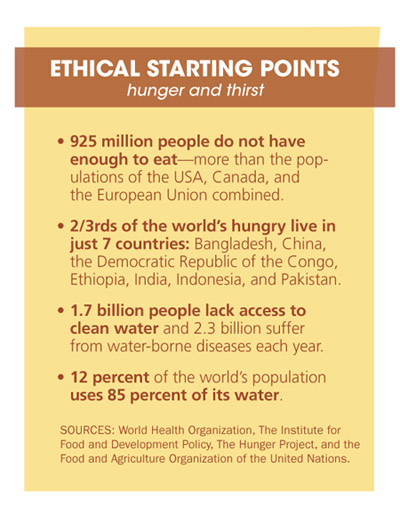 The ethical project has made us the beings we are. It has embedded the everyday desires of our remote ancestors—their yearnings for food, shelter, reproduction, and protection—in a far richer framework of aspirations. At the same time, it has relinquished the equality of the group-wide conversation, given finely differentiated roles and, through allowing us to live in societies that are vaster and more disparate, it has made many of our fellows invisible to us. We have inherited a body of ethical resources—ideals, values, and maxims—built up over thousands of years in response to the contingent problems of different eras, some of them important ways of extending our altruistic responsiveness, others expressions of the particular tastes of individuals who were once attributed powers to discern the deity’s will, and granted the authority to terminate ethical discussion. Our legacy includes both the injunction to care for one another and the prohibitions of Leviticus.
Why does any of this matter? Even were my narrative accepted, it is easy to think it irrelevant, to suppose that understanding how we came to have the complex ethical practices we do has no bearing on how we might confirm or amend the ethical systems of today. That judgment is, in my view, profoundly mistaken. A recognition of our ethical past should undermine the image of ethical life by which we are held.
Ethics began as a social technology, designed to solve the problems posed by the limits of our altruistic tendencies. For a restricted group, the small band, tensions of everyday life were alleviated by formulating values, ideals, and rules, which were forged in discussions on terms of equality. In the evolution of the ethical project, wonderful transformations of human life occurred: people acquired the abilities to live together on a broader scale, to cooperate far more extensively, to recognize themselves as importantly contributing to joint projects, to refine crude sympathies into complex emotions of friendship and love. Yet the introduction of specific ethical authorities was a definite loss, one felt through the ages by those whose lives have been warped by arbitrary taboos. So we have come to see ethics as a matter of revelation—or, for secularists, of discovery—to acquire an unwarranted metaphysics that makes ethical change thoroughly mysterious.
There are no experts here, no people with the authority to close the conversation. Ethics makes progress through problem-solving, and our only resources are conversation, preferably as informed, as fully representative, and as mutually sympathetic as possible. There are no other methods for human beings to deploy, no special vision of some “ethical realm”, no power to discern the moral law within (or, for that matter, without), no transcendent law-giver whose will may be revealed to the faithful.
John Dewey, in my judgment the greatest philosopher of the twentieth century, hoped that the blind progress that is occasionally discernible in the history of ethical practices—think of the abolition of slavery, or the extension of opportunities for women—might become more sure-footed if we could understand more clearly what those practices are about. He viewed ethics as growing out of our natural human condition, and my narrative is an attempt to articulate that thought. I share Dewey’s hope, and believe that recognizing the evolution of the ethical project gives us clues for how to continue it.
There are two immediate lessons. First, there is no option for us but to continue the project begun many thousands of years ago. The only alternative we know is the possibility realized in the lives of our evolutionary cousins, a dead-end in which the features of human life have been canceled. Second, no essay on the way forward can offer definitive advice for going forward; it can only seek to facilitate a conversation. In truth, no philosopher (or other thinker) can presume to write an essay on “The Ethics for the Human Future”—perhaps to even talk of a stance for that future is presumption enough.
Yet philosophers (as well as others) can offer proposals about ideals that might now guide us, and potential frameworks for the continuing conversation. Moreover, those proposals can be supported by analogies and disanalogies with the past of the ethical project. In this spirit, I suggest that the original problem that confronted our remote ancestors—how to make up for the limited responsiveness that makes social life so tense and fragile—has hardly disappeared. We live, of course, in a world in which the interconnections among human lives are multifarious and unsurveyable: for many purposes, the human species, including our descendants, forms a vast society. The conflicts within this society are as real, and as threatening, as those that originally inspired the pioneering proto-ethicists of the Paleolithic. Limited human altruism still cramps and twists the lives of billions.
Perhaps we would do well to emulate those who sat down together, on carefully guarded terms of equality, in attempts to ensure that the basic desires of all would be satisfied. Because of the refinements of human life that have emerged from the evolution of the ethical project, any discussions would inevitably range over a richer class of aspirations and intentions. Nevertheless, we might consider with one another what kinds of lives seem valuable, how clashes among lives can be avoided, and how the opportunity to live a worthwhile life might be spread as widely as possible.
Two proposals, then. First, an egalitarian ideal: the aim of achieving a world in which all people have serious, and roughly equal, chances of choosing and pursuing a worthwhile life. Second, a framework for ethical discussion: the simulation of a conversation that would represent all points of view, that would be free of identifiable errors (for example, the error of thinking that some principles are sacrosanct because they flow from the deliverances of a text or tradition, one that reflects the will of some deity), and that would be concentrated on trying to satisfy the reflective aspirations of all. One advantage of this pair of proposals is that it is plausible to think that they are mutually coherent.
So far, an ethical stance for the human future. I shall close by attempting to make it a little more concrete. If the proposals of the last paragraph are to be accepted, it will be important to ensure that the transformation of human aspirations can be sustained by the material conditions we have at our disposal. Serious opportunities for a worthwhile life for all can only be sustained if there are not so many of us that the preconditions of those opportunities—food, security, shelter, education, protection against disease—cannot be universally provided. A first imperative is that the size of the human population not exceed that number for which the preconditions of the ideal can be satisfied.
In the contemporary world, the lives of many are hostage to the distribution of necessary resources and often dominated by traditions that limit the possibilities of free choice. Religions claim authority to declare that only lives that exemplify a particular pattern can be worthwhile. Lack of education prevents many from recognizing possibilities for themselves that they would find valuable. Even in societies in which schools are available to all, the demands of the economic institutions impose barriers to self-realization, and all too often promote a debased conception of what is worth pursuing. Bumper stickers are frequently eloquent testimony to the impoverishment of conceptions of the valuable life—both those that announce that the Bible settles every question and those asserting that he who dies with the most toys wins.
A last Deweyan insight recognizes that ethics is social—not simply in the sense that conversation is our only resource for ethical decision, but also in the awareness that questions about lives of genuine worth must probe the social conditions that are taken for granted as people make their self-defining choices. Instead of believing that a particular simplified conception of human nature—Homo economicus, for example—sets constraints on our possibilities for living and for distributing the resources that all people need, a continuation of the ethical project would do well to ask if there are viable socio-economic arrangements that would make attractive ideals of human welfare realizable.
The past of the ethical project has made us what we are. Understanding our legacy might enable us to envisage what we—what all of us—might become.