
FIERCE HUMANISM

How Confrontationalism Can Open Doors

Share |


A woman walks into a café, orders a coffee and, before she pays, crosses off “In God We Trust” on her $20 bill. The woman is me, and scratching the motto off money is something I often do.

This time the woman behind the counter gave me a look. Irritated, offended. She looked like she wanted to tell me off, or start an argument. But instead she shrugged, and said (paraphrasing here), “Whatever floats your boat.”

I felt uncomfortable. Like most people, I don’t like upsetting others or making them mad at me. I’m fairly comfortable with confrontation online—heck, it’s my job, and it’s a job I enjoy—but when it’s in person, it makes me feel self-conscious and anxious. While the woman was getting my coffee, I had a brief argument with myself in my head. Was this bit of visibility for secularism worth the irritation and offense I had caused? Had I actually turned someone off to the ideas I was trying to convey? Was it obnoxious of me to do my little “secular government” visibility action in front of the barista, who is professionally required to be polite to me and doesn’t have the option of telling me to piss off? In doing my visibility shtick and trying to open some eyes to some new ideas and questions, had I instead just closed a door?

Here’s what happened next.

The woman came back with my coffee and said, “If you don’t mind my asking—why do you do that?”

And the door opened.

I said (again, paraphrasing here), “Because it shouldn’t be on the money. Whether you believe in God or not, the government shouldn’t be taking sides on the issue. I don’t happen to believe in God—it’s okay with me if you do, you certainly have that right. But the government shouldn’t be telling me that I’m supposed to believe in God. It shouldn’t be telling any of us what to think about God. If we want religious freedom for everyone, the government should stay out of that question.”

And she thought about it for a moment, and nodded, and said, “Yeah, I guess I can see that.”

When activists in the humanist/atheist/godless community talk about confrontationalism versus diplomacy, we often assume that the two are mutually exclusive. Even those of us who think both methods of activism are useful tend to assume that you can’t do both at once; you can get in people’s faces or you can have a friendly conversation with them—just not at the same time.

But this ended up being a civil conversation. A friendly one, even. It was a conversation where I got my idea across: a somewhat important one, about secular government and separation of church and state. It was a conversation where I got someone to think differently, possibly even to change her mind.

And it started as a confrontation. In fact, I’ll go further than that. The friendly conversation wouldn’t have happened without the confrontation. I wouldn’t have gotten that idea across if I hadn’t been willing to start a confrontation.

Did you read about the bus ad campaign in Pennsylvania? The one where the local atheist group, the Northeastern Pennsylvania Freethought Society (NEPA), tried to run an ad featuring one word: “Atheists” with a period after it, along with names and urls of the group and their co-sponsor, American Atheists, in smaller type? Did you read about how the bus company rejected the ad because it was too controversial?

For humanists and atheists and other nonbelievers, the unfortunate reality is that our ideas are, in and of themselves, confrontational. Heck—our very existence is confrontational. Some of this is because, to a lot of people, our ideas are very new. Some of it is because these aren’t just new ideas—they’re ideas that challenge some very important, very basic assumptions that people build their lives and families and communities around, and re-thinking those ideas can take a lot of work and create a lot of upset, both emotionally and practically.

But some of this is because of a very basic reality that we don’t always like to admit: We are being confrontational. When we come out as godless, we’re telling believers that they’re wrong. This is a fundamental difference between coming out as an LGBT person, and coming out as godless. When you come out as queer, you’re not telling straight people they’re wrong to be straight. But there is no way to say, “I don’t believe in God” without implying, “If you do believe in God, you’re wrong.” No matter how gentle our words are, no matter how many pretty pictures of blue skies and clouds we put behind them—and don’t get me wrong, I love the billboards with the pretty blue skies and clouds—some people are going to feel confronted.

They’ll feel that way because it is that way.

So that’s the bad news. If we’re godless, and we don’t keep it a secret, we’re being confrontational. But the good news is that confrontation doesn’t have to be the end of a connection. Confrontation can be the beginning of one.

Yes, I know. One conversation in a café shouldn’t make up the basis for an entire movement strategy. But I’ve seen this before. At the University of Illinois at Champaign-Urbana, the secular student group, Illini Secular Student Alliance (ISSA), participated in the controversial “Everybody Draw Muhammad” day—an action that angered and upset the Muslim student group. But rather than ending any possible relationship between the two groups, the event wound up beginning one. ISSA sent the Muslim group a letter explaining that they understood the action would be upsetting, and explaining why they felt they had to do it anyway. The Muslim group wrote back and explained their position. And although the action went on, and it didn’t make the Muslimshappy, the two student organizations now have a good relationship, and work together on service projects and other common interests. The confrontation didn’t close the door. It opened a door that stayed open.
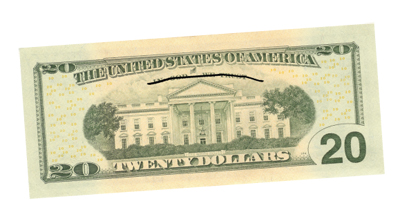
Confrontation is often a spark to changing our minds. Ask any good-sized gathering of non-believers how many of them used to be believers. And then ask how many of them changed their minds, at least in part, because of arguments from atheists that they read, or heard, or saw on YouTube, or engaged in with their friends or family. I guarantee you the number will be very high indeed.

I’m not writing this to try to persuade anyone to cross “In God We Trust” off the money at coffee shops. We all pursue visibility and activism in our own way, and I’m more than fine with that. I’m saying this: If I hadn’t been willing to be a little confrontational with that barista, we would never have had the conversation about why having “In God We Trust” on the money is bad for everyone. Confrontation doesn’t have to mean a fight or a schism. Instead it can start a conversation worth having.

Greta Christina is a widely read and well-respected atheist blogger (Greta Christina’s Blog, freethoughtblogs.com/greta). She is also the author of Why Are You Atheists So Angry? 99 Things That Piss Off the Godless (Pitchstone Publishing), is a regular contributor to AlterNet, and has been published in Ms.SalonSkeptical InquirerFree Inquiry, and the Chicago Sun-Times.


Share |


  • CanuckMom

    I’m Canadian, and although we don’t have a mention of God on the dollar bill, God is still, everywhere. I am also 43, and just last year I mustered some courage, because I too hate face to face confrontation, and told myself that when I went to vote, if asked to ‘swear’ I would say ‘I want to affirm’. I had to mentally prepare for the possibility that this would be met with some type of negative reaction, even though, maybe it wouldn’t. The fact was, a negative reaction was VERY possible, and so, in order to do this, I had to accept I might face a confrontation. Anyway, I affirmed, and while there was a scramble from the folks at the polling station ‘she wants to affirm, what do we do!’, no one said anything negative. Because of my experience, my husband now does the same. I believe we must be outward in our atheism, in its validity. It starts with accepting there might be backlash, but knowing too, that it might go just fine and you might actually make a difference in how people think about the idea of freedom of religion also meaning freedom from religion.

    • http://www.facebook.com/claire.hyman Claire Medol Hyman

      Worst thing all people do is avoid conversation about belief and Freedom is a belief as valid in its essence meaning simply ‘freedom’ as religions are beliefs. Ours as atheists are really more easily described and cheaper to adhere to. Its called ethics, no harm is done to the other.

      • http://slrman.wordpress.com James Smith

        When I was called as a witness in a deposition hearing and asked if I would tell “the truth, the whole truth and nothing but the truth” I answered, “no.” I pointed out it was a question, not a demand.

        Most people automatically say, “Yes” then lie as suits their convenience. I stated that I was at least being honest from the start. That’s more than they get from most people. After some consultation, they decided to accept that. I was hoping to be excused as the entire procedure was a waste of time.

    • http://www.facebook.com/profile.php?id=615100654 Pam King

      I had the same reaction the first time I had to affirm in court to ‘swear’ a warrant – they scrabbled around trying to find the card and then just got on with it- but from then on the Magistrates recognised me lol I think it is about being true to yourself- if i had sworn on a Bible as they had originally assumed I would do I would have felt that what i was doing was false and therefore my warrant was based on a falsehood. I felt nervous before and during- but afterwards I felt good- and from then on I have been very open about my atheism- and have had regular confrontations :)

      • http://twitter.com/TychaBrahe TychaBrahe

        If called into court, I plan to pledge to tell the truth on my life, my fortune, and my sacred (in a secular sense) honor. The American colonists pledged to fight for the freedom of their new nation on that basis, and I feel it’s good enough for court testimony.

  • http://www.facebook.com/jane.ravenswood Jane Ravenswood

    Confrontation makes change. If we sit still and do nothing, or even just “hold the line”, we’ll soon find our backs against the wall. It is indeed scary feeling to do it, but ever time I have, I’ve felt fantastic afterwards.

  • Jennifer Allen

    OK, here’s a test of sincerity for Greta, CanuckMom, and Jerry Kindall. How would y’all react to a nudist who broke the law regarding public nudity in much the same way as Greta broke the law against defacing currency?

    • http://twitter.com/Peggesis1 Peggy Clancy

      As I understand it, removing “In God We Trust” from the currency is not against the law. Have you heard something else?

    • http://www.facebook.com/daviddiskin David Diskin

      The United States Department of Treasury’s Bureau of Printing and Engraving website describes the regulation as follows:

      ” Defacement of currency is a violation of Title 18, Section 333 of the United States Code.
      Under this provision, currency defacement is generally defined as follows:
      Whoever mutilates, cuts, disfigures, perforates, unites or cements together, or does any other thing to any bank bill, draft, note, or other evidence of debt issued by any national banking association, Federal Reserve Bank, or Federal Reserve System, with intent to render such item(s) unfit to be reissued, shall be fined not more than $100 or imprisoned not more than six months, or both.
      At first pass, it sounds like someone could go to jail. ”
      But if you read carefully, the only thing it’s limiting is “rendering [the] item unfit to be reissued”.
      So, unless you are marking the bill with the intent to render it unusable, you’re fine.

      Using a marker to, say, change a $10 to a $100 would be bad news. But writing on it is perfectly fine and doesn’t even need to invoke Free Speech protection. Further consider that retailers frequently use a special marker on $20s to test for counterfits.

    • Captainahags

      Holy false equivalency, Batman! a) It’s not illegal to cross out the motto, just as it’s not illegal to put those little “where’s George” stamps on bills. b) I’d probably think it was not really my business, actually. Doesn’t really bother me- unless the person insists on harassing me and repeatedly trying to make me look at something that really shouldn’t be seen in public to begin with… Hey, wait a minute… It’s almost as if the public nudists are- the people who want to put their god everywhere!

    • http://www.facebook.com/profile.php?id=116400943 Leo Buzalsky

      I’ve had a similar conversation about this before. While I am not a lawyer, I do not see how this would count as “defacing.” Here’s a definition I pulled up: “to mar the appearance of : injure by effacing significant detail.” I don’t see “IN GOD WE TRUST” as being a “significant detail.” So where is the violation of the law? I could see that being an issue if one were to draw over the serial number or draw so much on a bill that it becomes unrecognizable or makes the watermarks difficult to see (though those have issues of being subjective), but not for this.

    • http://pulse.yahoo.com/_2QFDMDBAKG3J6W77ZVU4Q4XOZE Gt

      “In God we Trust” shouldn’t be on money in the first place, and therefore that phrase is actually the illegal, unconstitutional, part. Crossing it out actually fixes our money, making it once again compliant with the 1st Amendment.

    • zharth

      The nudist is merely exercising his responsibility as a concerned citizen to commit civil disobedience and should be lauded for his courage to stand up for his constitutional rights.

    • Dave Roscoe

      Well, I guess I’d react the same way I do to all those people who squash pennies into souvenirs of Disneyland using the machines provided for that purpose at Disneyland.

      • mdhome

        Well, that would render the currency unfit for reissue, $100 dollar fine for you. I cross off god and print dog

    • Digital Liberty

      She didn’t deface it. She fixed it.

  • Phillip2

    “OK, here’s a test of sincerity for Greta, CanuckMom, and Jerry Kindall.
    How would y’all react to a nudist who broke the law regarding public
    nudity in much the same way as Greta broke the law against defacing
    currency?”

    Is there a law against public nudity where you are? Should there be? Is so, why?

  • http://www.facebook.com/profile.php?id=1465205388 Jack Jesberger

    The stewardship (money getting) chairman at a church I once attended used to tell his committee, our measure of success is the number of conversations we have, not the amount of money we collect. That’s one value of atheist+, as a separate space for certain kinds of conversations that were proving almost impossible to have within the larger community.

  • http://www.facebook.com/claire.hyman Claire Medol Hyman

    p.s I currently have an art show hanging at the Ethical Society in St. Louis, MO though not of my activist works.

  • capierso

    Whoo hoo! Wish I had more money in my wallet, Iam having fun with my pen

  • mw

    Funny coincidence – - just a few days ago I improved a bunch of bills by converting the D to B (in gob we trust). My daughter had said she found the original phrase objectionable, and I saw that she had a point, so I followed words with action.

  • http://www.facebook.com/people/Jim-Bishop/672604057 Jim Bishop

    I will do so from now on.

  • BFD

    Thanks for this post. I was the angry Atheist at a Christian/Baha’i funeral for my mother-in-law yesterday and I certainly wasn’t talking about my beliefs, but it was still very hard to have to nod while people explained to my children about god and heaven. I felt very uncomfortable and sad. My kids are not Atheist; they can believe whatever they want. However, it was difficult to drive while my five year old was shouting at me in the back seat “GOD IS REAL HE IS IN HEAVEN WITH GRANDMA YOU DON’T KNOW ANYTHING HE IS OUR CREATOR.” I really wish I could believe stuff like that. It must be very freeing to not consider this very life all there is. I decided then that I won’t be able to stomach Christmas this year; I need to spend time in quiet Atheist reflections so I can spend time with my family again. Sigh.

    • MrQuestion

      BFD, I find it even sadder you would not protect your family and allow them to be influenced by such nonsense. You don’t believe, do you understand why you don’t believe? You say your children aren’t atheist, yet you allow them to believe in nonsense? Secondly, you allow your child to yell at you with such disrespect? Are you a “Friend” or a father?

      • Mel

        I think that was an insulting comment. I am agnostic. I have my own beliefs about spirituality as well as philosophy; however, I would never have my children believe as I do because it is what I believe. We always tell our children to question everything, even mommy and daddy. I think it is wonderful that BFD does the same. It is not our role as parents to teach our children to believe the same as us, but to teach them. Also, I would dare say BFD’s child was probably experiencing grief over the death of his/her grandmother, hence the yelling, an outpouring of emotion, which is healthy and should be respected. I think BFD makes a great father, and friend as well:)

    • http://www.facebook.com/MissSkulls Julez Rulez

      It’s easy to believe in something bigger than us… Just like kids have their parents watching over them, protecting them, being there for them when they need it…but if you re “grown up” and there are no parents to run for help or support to, people tend to ask “god” for help… I guess i can understand it, it’s pretty basic… People are scared and worried, lost and helpless, overwhelmed with life… and to comfort them, they go talk to god. For weak minds, i guess its better to believe there s someone there, watching over you, than to know you are all alone on this quest called life. I was raised Catholic in a small city in Bavaria Germany, my grandma loved church, she went as often as she could… my mom didnt want to upset her,so she babtised us kids and dragged us to church every sunday untill we were 11 or so… I hated it…sooo boring ;) Well, thats y i dont understand y your 5 year old would throw such a fit. Maybe its different in the states, maybe church is actually fun lol but i suppose if you live in a town full of jesus freaks (pardon my french) and friends, family & teachers push their believes on them its understandable, after all, kids are very easy to influence. @ Mr question: Try to keep your kids away from Pokemon, beyblade, xbox and what not… U can throw your tv out and homeschool them but if u do and they actually meet some kids from the outsideworld…they r going to be the weirdos… Same with religion… Well too an extend. Hope you know what i mean. Good luck to you!

  • NO GOD

    There is no god and I sure do not trust our government. END OF STORY!

  • Mark B

    Just as you believe you have some need to banish all references of God, or other religious references from our money, and anywhere else you can think of, I believe just as strongly that each of us, those following a particular faith, or those that prefer not to, each have the right to not have individuals who feel differently shove their opinion/beliefs in their faces.
    Confrontation is unnecessary, undesirable, and usually serves little or no purpose. It should be avoided whenever possible.
    Your petty, selfish and unnecessary behavior should embarrass you. Want a work around? Use credit/debit cards, they contain no reference to God. That way you can be satisfied that you are not promoting something you don’t support, and you won’t purposefully act as an irritant to those who may believe otherwise.

    • Russ Byrd

      Your saying of course, that you DO have the right to shove your beliefs into the faces of those that do not agree with you. Remove the motto and no one has a problem!

    • Beyond Belief

      Banishing references to God ( or any supportive/enabling reference to religion generally) from all GOVERNMENT instruments and agencies is the goal.

      I’m also not too keen on your essential premise, paraphrased , “You don’t like the way we’ve set things up? Then leave.”

      Cash is freedom of association. Telling me that if I don’t like the fact that YOUR aggressive, proselytizing forebears put these words on cash used by all citizens regardless of belief, I can use credit cards…. is an affront to my equal citizenship.

      Cash is the ability to transact business without trace. It is a government issued instrument designed to enable trade, and as such should have no reference to any religious concepts. It’s just too easy. And if it’s no big deal, then why don’t YOU do the backing down? Just get rid of religion in government and all citizens will be treated equally… free to believe privately.

    • Isilzha

      Why do you think you have the right to use the government to force everyone to acknowledge your religion? If you want to live in a theocracy go move to one that already exists. Stop trying to make the US a theocracy.

  • Ladymissd

    I rarely use cash so I don’t think much about “improving” any currency I happen to use. However, next time I do find myself with a wad of bills I like the idea of adding an extra “o” to “god”, changing it to “In Good We Trust”. Now who could argue with that?!

  • http://www.facebook.com/john.forest1 John Forest

    Arguably, we need a much stronger wall between church and state in the U.S.A. However, even though I appreciate the basic sentiment, I would argue that it is a pointless exercise that holds little to no hope for changing the mind of a single person. If my premise it true, then all that remains as a likely response is to have an aggravated recipient of the bill. I understand that you feel as though your day was ‘lessened’ by being forced to trade in such nonsense but what is helped by aggravating another person? It might pay to remember that the person receiving the money could hardly be further down the pecking order from the policy makers who decided such matters. And, yes, I did consider that many Joe/Mary six pack voters now vote with the religious-right-wing which doesn’t help things.

    • Beyond Belief

      Those ideas you are not asked to face are invisible. Those ideas you accept becaue they are ubiquitous become the norm. The value in “aggravating” another person is the same as the value in art: asking someone, whether they choose to or not, to consider reality from another angle.

      We desperately need to not allow “belief” to be the de-facto white noise, the assumed position. It raises consciousness to inject a little confrontation.

  • no_mad

    I cross the idiocy off all my paper money. I am a little more circumspect than to cross it out in front of a person who is going to serve me an open beverage. The wackos might think it a prove of god’s love if they spit into the beverage of one of the reasoned.

  • secularismworks

    funny how your paraphrases of yourself are far more articulate than your paraphrases of others.

  • http://www.facebook.com/profile.php?id=100000075415076 Mia Salanthra

    Wow..an atheist and a criminal…all wrapped up into one. Since it is against the law to deface money..that does qualify you as a criminal now. Go you! You must be so proud!

    • JB

      One who cannot tell the difference between ethically justifiable civil disobedience and unethical criminality is irrational. My sympathies.

    • Gad

      Maguire’s Irish Pub in Florida has about 2 million ‘defaced’ dollar bills hanging on the walls and ceiling. Wanna make an issue out of it? Go ahead and start prosecuting the customers and owners. I’d love for you to publicly highlight your insecurity. Why else would you need to use currency to proselytize your god beliefs? It’s the only way you can make your imaginary friend exist.

  • Dave

    Right after the crossed out words, you could write 1956. The IGWT motto is not the founders’ idea. It was signed into law in 1956.

  • Adam

    I
    agree with the point of the article: confrontation is often a good thing. Too
    many of us take the path of least resistance (myself included), and that path almost
    never leads to change. However, I disagree that “there is no way to say, ‘I
    don’t believe in God’ without implying, ‘If you do believe in God, you’re
    wrong.’” Many of the non-believers I know, including myself, simply have
    no opinion of deities. For all I know there could be a heaven and a hell, or
    reincarnation, or angels, or whatever else religion teaches its adherents. If
    someone wants to believe those things it’s fine with me. Conversely, many of
    the religious people I know are not affected in the least by non-believers. They
    are happy with their faith and are don’t find my lack of it particularly
    troubling.

  • Godless

    I’m holding out ADMITTING that I mark out the word “God” on my paper currency until I get the issue straight with the Secret Service but I do applaud your willingness to share this story about your secular activism. Keep up the good work!

  • http://www.facebook.com/vir.narain Vir Narain

    “If you do believe in God, you’re wrong.”

  • Vir Narain

    Greta Christina is not being logical when she claims: ‘But there is no way to say, “I don’t believe in God” without implying, “If you do believe in God, you’re wrong.” It amounts to saying ‘If you don’t agree with me you are wrong’. This borders on bigotry.

    We should heed Hermann Bondi’s advice. ‘So it seems to me that the important thing is not the concept of God – indeed we cannot quarrel with an undefined God, for how can we disagree with a concept that is undefined. No, what makes a religion is a “revelation”. And it is the belief in a revealed truth that is the source of religious problems – that the Koran is the word of God, or the Holy Bible is the judge of everything. So in arguments with
    Christians, when you come to the word God you have already lost the battle. You
    must stress the revelation, that’s where the real disagreement lies, because if
    you are driven to a position where you have to deny the existence of an
    undefined quantity you are in a logical absurdity.”

    In Greta Christina’s account there is also the question of respect for the law of the land.

    Lastly, persuasion is generally more effective than confrontation. Rejection and ridicule do not change people’s minds.